Explainer
What AI can and cannot do in cancer pathology
Algorithms that read digitised slides are moving from research into hospitals. A short guide to what they need, where they help and where caution is due.
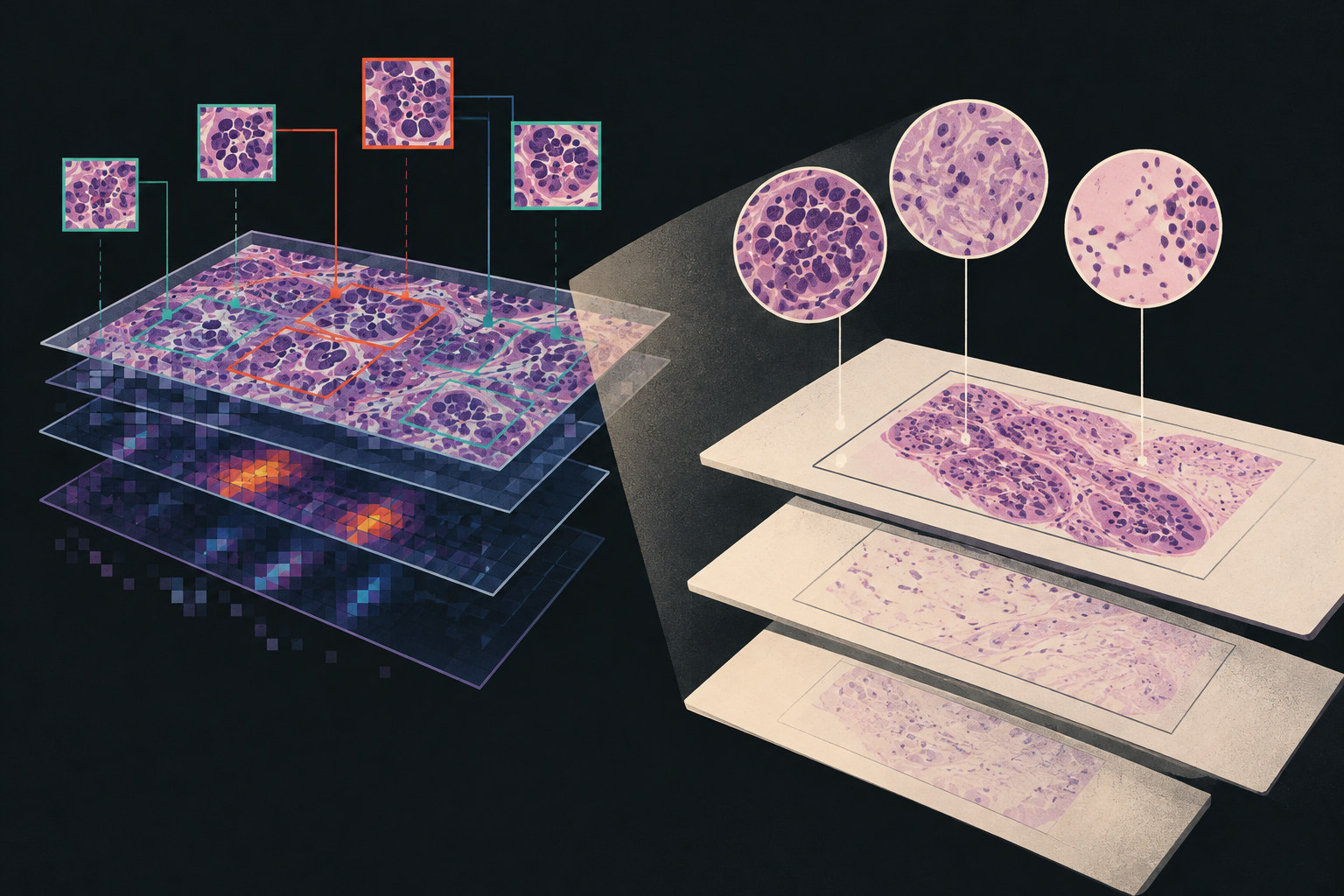
Most cancer diagnoses still rest on a pathologist examining a stained tissue section under a microscope. Digital pathology turns that glass slide into a very large image, and software can then be trained to find patterns in it: tumour cells, areas of invasion, the density of immune cells, or the features that separate one tumour subtype from another.
What it needs first
AI in pathology depends on infrastructure many services do not yet have: slide scanners, storage for files that can run to several gigabytes each, reliable connectivity, and well-prepared slides. Before anyone tests an algorithm, a laboratory has to produce consistent digital images.
Where it helps
- Triage. Flagging slides that are likely to contain cancer so they are read first.
- Counting and measuring. Scoring a marker across thousands of cells is tedious and varies between observers.
- Second reading. Highlighting regions a pathologist may want to look at again.
Where caution is due
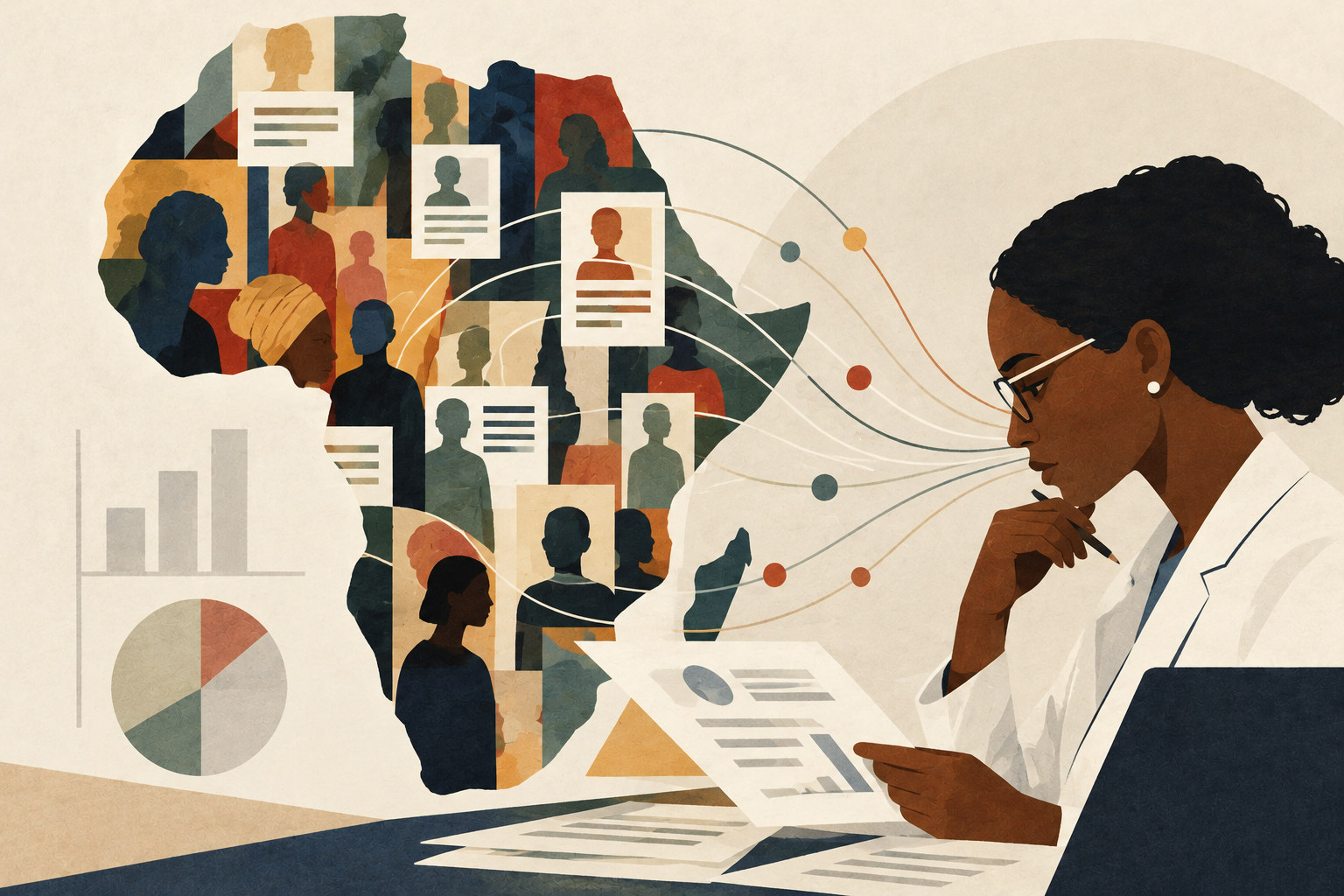
An algorithm learns from the slides it was trained on. Differences in staining, scanners, tissue handling and patient populations can all reduce its accuracy elsewhere, sometimes without any visible sign. A model that performs well in one country needs to be validated on local cases before it is relied on in another, and its performance should be monitored after it is introduced.
These tools do not remove the need for pathologists. They change what pathologists spend their time on, and they work best where a trained person reviews and signs the report.
Questions to ask
- On whose slides was the model trained and tested?
- Has it been validated in a setting like ours?
- Who is responsible when it is wrong?
- What happens to patients' images and data?
Sample explainer for website testing.